

The Sea of Cortez is globally renowned for its giants. Divers flock here to swim with massive sea lions, watch humpback whales breach on the horizon, and explore the towering steel structures of the SAAS wrecks. But if you spend your entire dive constantly looking out into the blue, you are going to miss half the magic.
San Carlos is a world-class destination for macro diving. The rugged, volcanic reefs and sheltered coves are the perfect habitats for some of the ocean’s most bizarre, colorful, and fascinating tiny creatures. For underwater photographers and critter-hunters, slowing down and staring at a single rock can yield incredible rewards. Here is a guide to the spectacular “small stuff” hiding in San Carlos.
The Stars of the Macro Show
When you transition from looking at the reef to looking closely at the reef, a new cast of characters emerges.
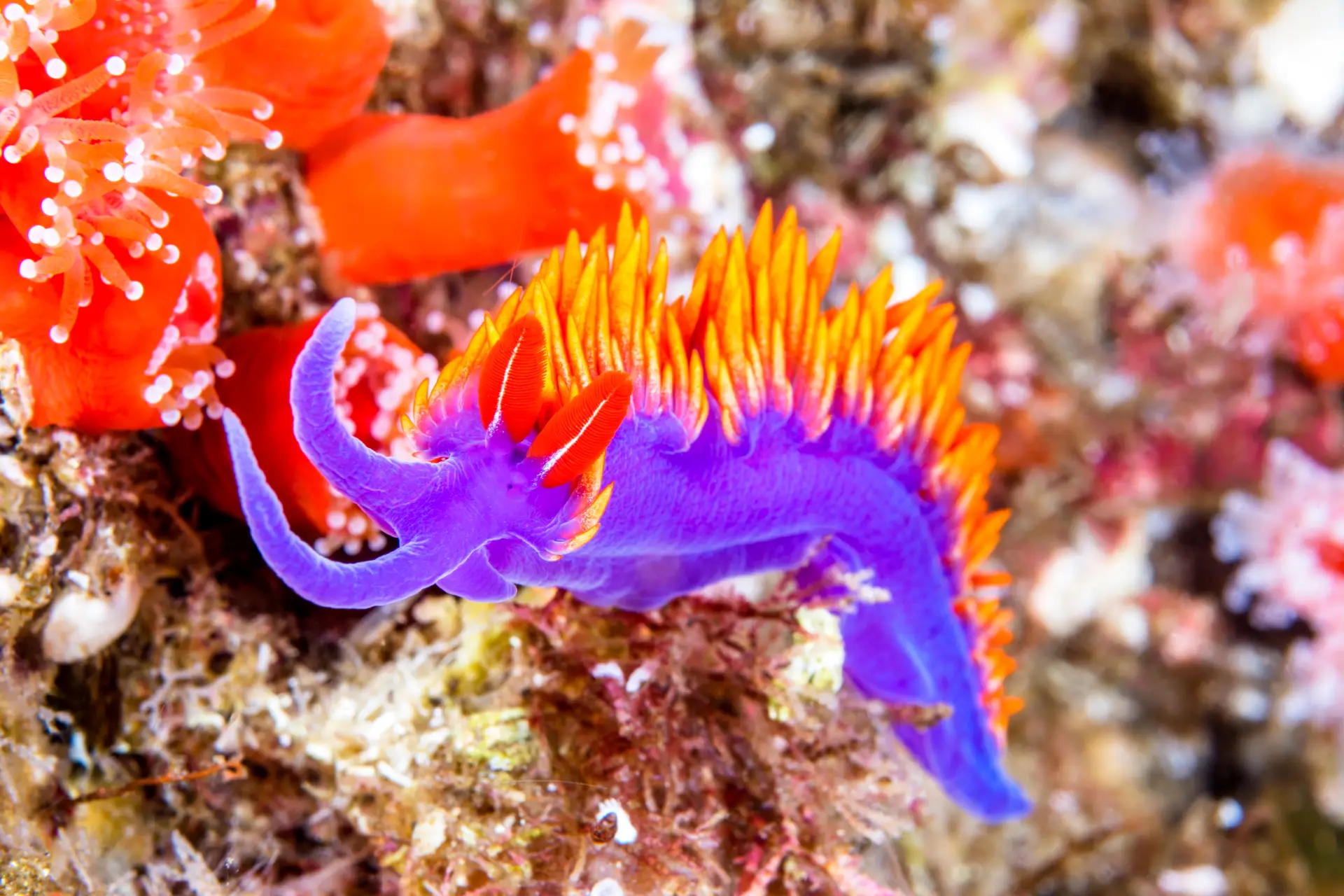
Nudibranchs: The Jewels of the Sea
If there is one macro critter that photographers obsess over, it’s the nudibranch (sea slug). San Carlos is teeming with them, especially during the cooler months when the water drops below 70°F (21°C). Look closely at sponges, hydroids, and rocky drop-offs to spot these brilliantly colored animals.
- The Spanish Shawl: A local favorite. This nudibranch features a stunning neon purple body, a bright orange fringe (cerata), and scarlet rhinophores. They are often seen boldly crawling across the reef or even free-swimming in the water column!
- Tambja Nudibranchs: Look for the Tambja abdere and Tambja eliora, which sport striking combinations of yellow, green, and turquoise stripes.
The Comical Jawfish

Head to the sandy channels between the rock formations, particularly at Window Rock, and look for small holes in the sand surrounded by crushed shells. If you wait patiently, a head with massive, cartoonish eyes will pop out.
San Carlos is home to the Bluespotted Jawfish and the Finespotted Jawfish. These industrious little fish spend their days excavating burrows, moving rocks with their mouths to reinforce their homes. If you are incredibly lucky (and observant), you might spot a male jawfish brooding eggs—they carry the fertilized eggs in their mouths until they hatch!
Blennies: Masters of the Crevice
 Blennies are the grumpy old men of the reef. They are tiny, bottom-dwelling fish that back themselves into empty barnacle shells or worm tubes, leaving only their heads poking out to watch the world go by.
- Barnacle Blennies: Look closely at the sharp barnacle clusters on the rocks. You’ll often see tiny faces with fuzzy “eyebrows” (cirri) darting out to snatch passing plankton before instantly retreating.
- Signal Blennies: These are a true prize for photographers. The males possess a massive, sail-like dorsal fin. To attract females or ward off rivals, they will violently flick this fin up and down like a semaphore flag.
Symbiotic Crustaceans
Every anemone and sea star is a potential apartment building for tiny crustaceans. Look closely at the tentacles of tube dwelling anemones or the undersides of chocolate chip sea stars. You can often find tiny, transparent cleaner shrimp and intricate decorator crabs—crabs that literally glue pieces of sponge and algae to their own shells for perfect camouflage.
Best Dive Sites for Critter Hunting
While macro life is everywhere, some sites are tailor-made for it:
- Window Rock: The undisputed champion of San Carlos macro diving. Because it is a shallow, sheltered shore dive, you can spend 60+ minutes at 30 feet slowly combing the reef for nudibranchs and jawfish without worrying about boat currents or deep no-decompression limits.
- San Antonio Point: The rocky rubble and gentle sandy slopes here are perfect habitats for blennies and small octopuses.
- The SAAS Wrecks: Don’t just look at the big ship! The rusted hulls of the Santos and Suchiate are now covered in artificial reef growth, providing millions of tiny hiding spots for blennies, crabs, and juvenile fish.
The Golden Rule: Buoyancy is Everything
You cannot be a successful macro diver if you are bouncing up and down or kicking up sand. Critter hunting requires absolute stillness. You need to be able to hover inches from a delicate nudibranch without touching the reef or silting out your buddy’s visibility.
This is why the SSI Perfect Buoyancy specialty is the single most important course an aspiring underwater photographer can take. Mastering your breathing and trim allows you to freeze in mid-water, get your camera steady, and capture the shot without ever harming the environment.
The next time you dive the Sea of Cortez, take a moment to stop swimming. Pick a single boulder, get close, and just watch. You’ll be amazed at the tiny, vibrant world staring back at you.
Ready to grab your camera and go critter hunting? Book a guided dive with us today, or sign up for your SSI Perfect Buoyancy course to dial in your hover!