

There is a specific hand signal in diving that stops everyone in their tracks. The hand goes to the forehead, flattened like a fin. Shark.
Whether you are a thrill-seeker or a nervous novice, seeing a shark in the wild is a defining moment. It is a brush with the apex of the ocean, a reminder that we are merely visitors in a wild kingdom. The Sea of Cortez, with its nutrient-rich waters and protected islands, is a fantastic place to have these encounters. But it’s important to know what to look for.
Unlike an aquarium or a baited shark dive, encounters in San Carlos are natural and wild. Here is a guide to what divers might see, ranging from our reliable residents to the lucky lottery tickets of the blue water.
The Reliable Residents: What You Will Likely See
If you are diving the rocky reefs of San Carlos or the slopes of Isla San Pedro Nalasco, these are the sharks you should be checking under the ledges for.
 The Sleeping Giants: Nurse Sharks

The most common shark encounter in our waters is also the most relaxed. The Nurse Shark (Ginglymostoma cirratum) is the couch potato of the shark world. They are nocturnal hunters, meaning during your day dive, you will almost certainly find them sleeping.
The Encounter: Look for them tucked deep under large overhangs or piled up together in caves. They are often large—up to 9 or 10 feet—but their behavior is docile. You can settle on the sand (carefully!) and observe them breathing, watching their gills pump water. It’s a peaceful, non-threatening encounter that allows for great photography.
 The Patrolling Sentries: Whitetip Reef Sharks
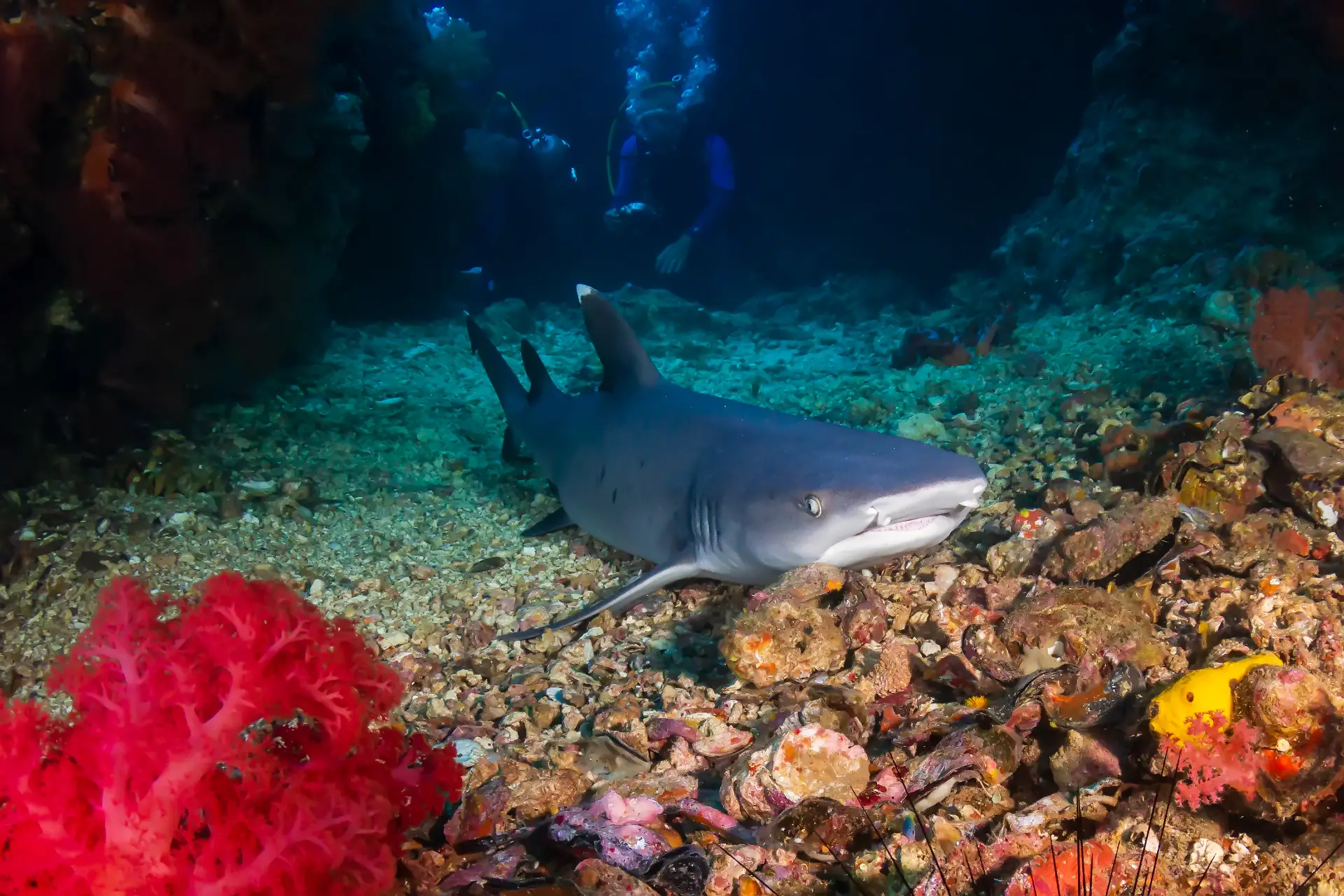
At Isla San Pedro Nalasco, the Whitetip Reef Shark (Triaenodon obesus) is a star attraction. Unlike many other requiem sharks that must keep swimming to breathe, Whitetips can pump water over their gills while resting.
The Encounter: You might find them resting on the sand in a canyon, but they are easily startled. The best encounter is often spotting one patrolling the edge of the reef. They have a distinctive, slender body and, of course, the white tip on their dorsal and tail fins. They move with a slinky, serpentine motion that is mesmerizing to watch.
The Seasonal Visitors: The Gentle Giants
The Sea of Cortez is a major migratory highway, and depending on the season and the plankton blooms, we get visits from the biggest fish in the sea.
 The Whale Shark
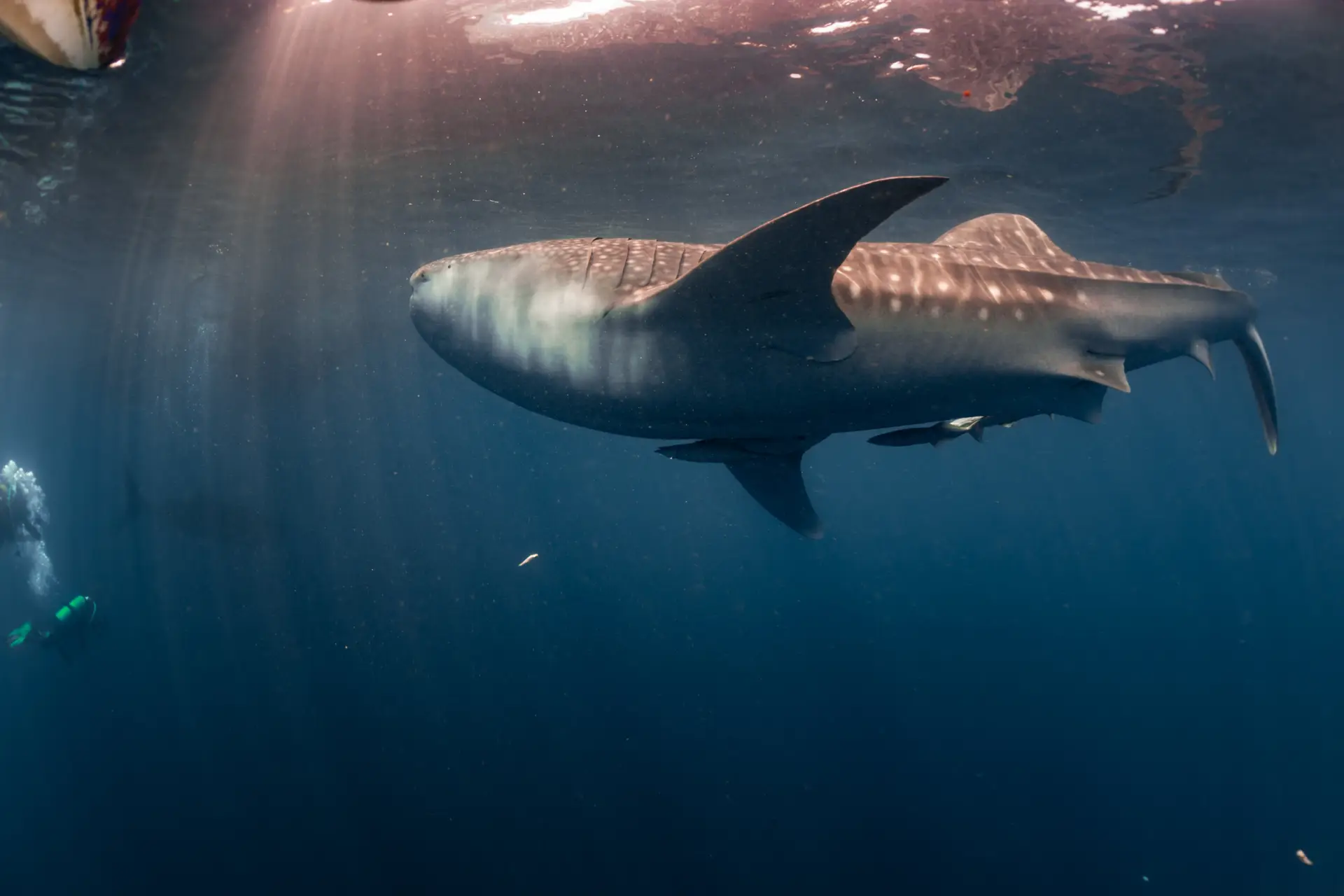
While the Bay of La Paz is famous for its winter aggregation, Whale Sharks (Rhincodon typus) roam the entire Gulf. In San Carlos, sightings are most common when the water is nutrient-rich (often late winter/early spring or late summer).
The Encounter: This isn’t a “scary” shark encounter; it’s a spiritual one. Seeing a 30-foot, polka-dotted giant emerge from the gloom is breathtaking. They move deceptively fast despite their slow tail beat. If you see one, the rule is simple: don’t touch, and fin hard to keep up!
The Lottery Tickets: Rare Pelagic Encounters
These are the sightings that happen when you are looking away from the reef and out into the deep blue. They are not guaranteed, but they happen enough to keep us constantly scanning the horizon.
 The Schooling Scalloped Hammerheads

While the massive schools are typically found at offshore seamounts further south (like Gordo Banks), solitary Hammerheads or small groups are occasionally spotted cruising the deeper walls of our offshore islands. Their unmistakable silhouette is an instant adrenaline rush.
The Silky and Blue Sharks
If you are on a boat ride to a further site or diving a deep pinnacle, you might encounter these pelagic wanderers. Blue sharks are incredibly sleek with a brilliant indigo color, while Silkies are curious and bold.
How to Behave During a Shark Encounter
Wild shark encounters are safe if treated with respect. Sharks are generally cautious of divers (we are noisy, bubble-blowing aliens to them). To get the best interaction:
- Stay Calm: Do not thrash or swim rapidly away. This can trigger a predatory chase instinct (though usually, they just swim away from the noise).
- Get Low: Sharks often feel more comfortable if they are above you. Settling on the bottom or staying close to the reef wall makes you less imposing.
- Do Not Chase: This is the number one mistake. If you swim *at* a shark, it will leave. If you stay still, its natural curiosity might bring it closer for a pass.
- Enjoy the Moment: Don’t spend the whole time fiddling with your camera. Take a moment to appreciate seeing an apex predator in its natural habitat.
Seeing a shark in San Carlos is a sign of a healthy ocean. It’s a privilege, a thrill, and a memory that will last a lifetime.
Hoping to see a shark on your next dive? Book a trip to Isla San Pedro Nalasco, your best bet for a wild encounter!