

It’s a story every diver knows. You descend into the Sea of Cortez, and the world explodes with life. A brilliant orange sea fan glows next to a purple sponge. A school of yellow-tailed surgeonfish streams by. You raise your GoPro or your new underwater camera, click the shutter, and capture the moment. Later, on the boat, you excitedly review your photos only to feel a wave of disappointment. Everything is… blue. The vibrant scene you remember has been replaced by a flat, monochrome, and frankly, boring image.
If this sounds familiar, you are not alone. It is the single most common frustration for aspiring underwater photographers. The good news? The problem isn’t your camera. It’s the water itself. And the even better news? The techniques to defeat the “great blue robbery” are easy to learn, and there is no better place on Earth to master them than right here in San Carlos.
It’s time to stop taking blue pictures. Here’s how the Underwater Photography Specialty course will turn your frustrating snapshots into stunning masterpieces.
The Great Blue Robbery: Why Water Steals Color
Before you can fix the problem, you have to understand it. Water is a giant, natural blue filter. As sunlight travels down through the water column, colors are absorbed one by one. The first color to disappear is red—it’s almost completely gone within the first 15 feet. Next to go are orange and yellow. By the time you’re at a modest 40 or 50 feet, the only color left to reach your camera’s sensor is blue and a little bit of green.
Your eyes and brain are so powerful that they automatically compensate for this color loss, tricking you into seeing a vibrant reef. Your camera, however, is a literal machine. It records what’s actually there: a whole lot of blue. The specialty course is all about teaching you how to give the color back to your camera.
Beyond “Auto Mode”: The Secrets the Specialty Unlocks
Getting great underwater photos isn’t about buying a more expensive camera; it’s about taking your current camera out of “auto mode” and taking control. The specialty course focuses on three key areas that will revolutionize your images.
1. Conquering Color with White Balance
This is the first and most powerful tool for photographers who don’t use external strobes. By setting a “manual” or “custom” white balance, you are essentially showing your camera a neutral white or grey object (like a slate or a sandy patch) and telling it, “Hey, this is what white is supposed to look like at this depth.” The camera then magically adjusts its color processing, bringing back the reds, oranges, and yellows that were lost. It’s the closest thing to magic in underwater photography, and learning how and when to do it is a complete game-changer.
2. Bringing Your Own Sunshine (Lighting)
The ultimate way to defeat color loss is to bring your own light. This is where strobes (for photos) and video lights come in. An external light source travels only a few feet to your subject and back, meaning no color is lost. This is the secret to those professional-looking photos with vibrant subjects and rich, dark blue backgrounds. The specialty course teaches you how to position your lights to avoid “backscatter” (those ugly white spots in your photo) and how to shape the light to create dramatic, beautifully exposed images.
3. The Art of Seeing (Composition)
A perfectly colored photo of a fish’s tail swimming away is still a bad photo. Composition is the art of arranging the elements in your frame to tell a story. The course moves you beyond just pointing and shooting, introducing you to fundamental rules that will instantly make your photos more compelling. You’ll learn about the Rule of Thirds, the power of getting eye-level with your subject, and how to use “leading lines” on a wreck to draw the viewer into the image. This is the skill that separates a “snapshot” from a “photograph.”
San Carlos: The Ultimate Underwater Photography Studio
So why is San Carlos the perfect place to learn these skills? Because it is one of the few places in the world that offers a world-class “studio” for both of the major disciplines of underwater photography on a single trip.
The Wide-Angle Wonderland
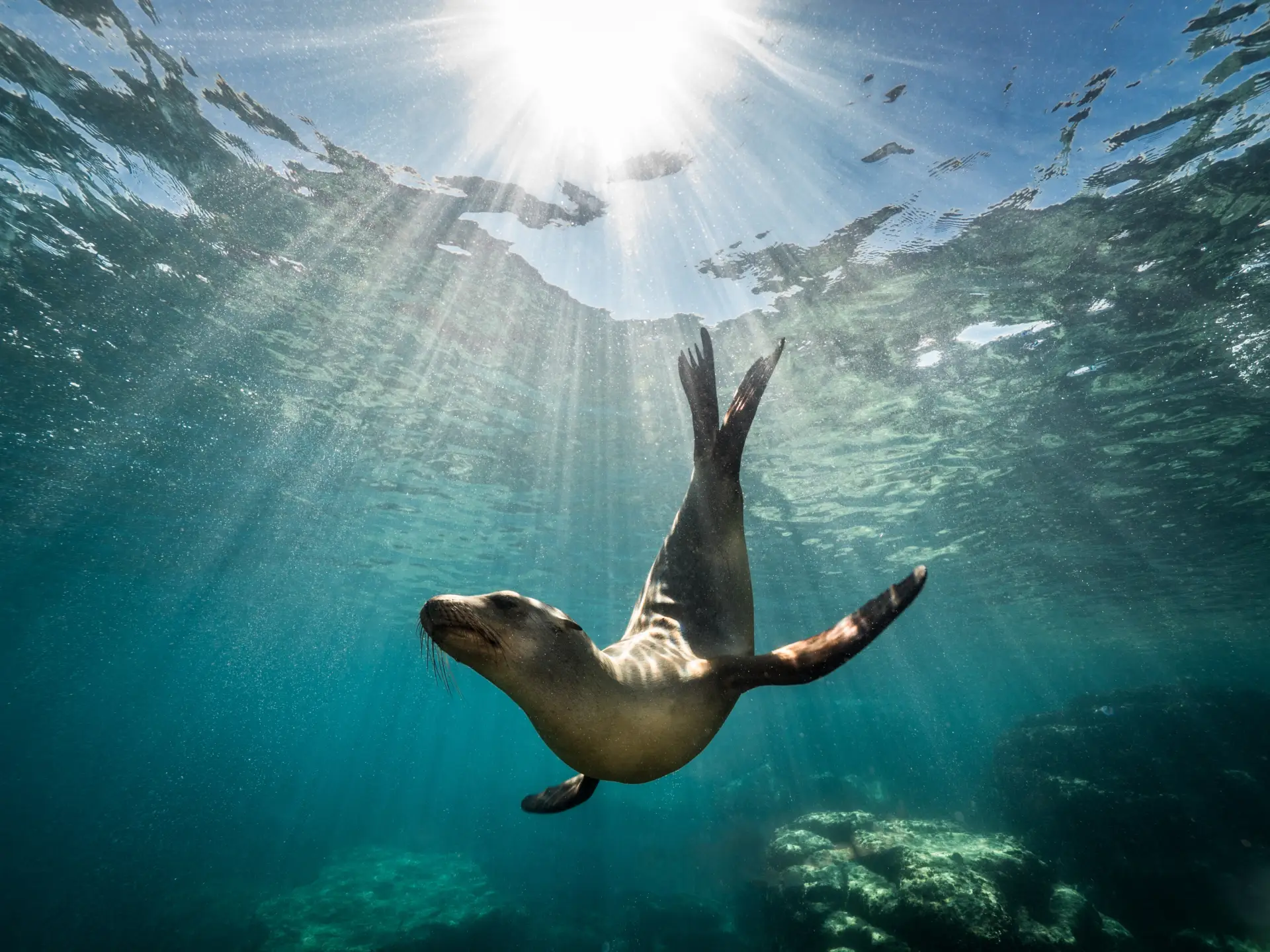 For practicing your big-picture, wide-angle shots, San Carlos is a dream. You can:
- Shoot the SAAS Wrecks: The massive, intact structures of the Santos and Suchiate are the perfect subjects for practicing wide-angle composition, ambient light techniques, and dramatic strobe lighting.
- Capture Action at Isla San Pedro: There is no better subject for learning to capture fast-moving wildlife than our resident sea lions. This is where you’ll practice anticipating behavior and nailing the focus on a dynamic, interactive animal.
- Frame Giant Schools of Fish: The colossal, swirling schools of jacks and snapper offer an incredible opportunity to learn how to photograph a “sense of scale” and create powerful, mesmerizing images.
The Macro Paradise
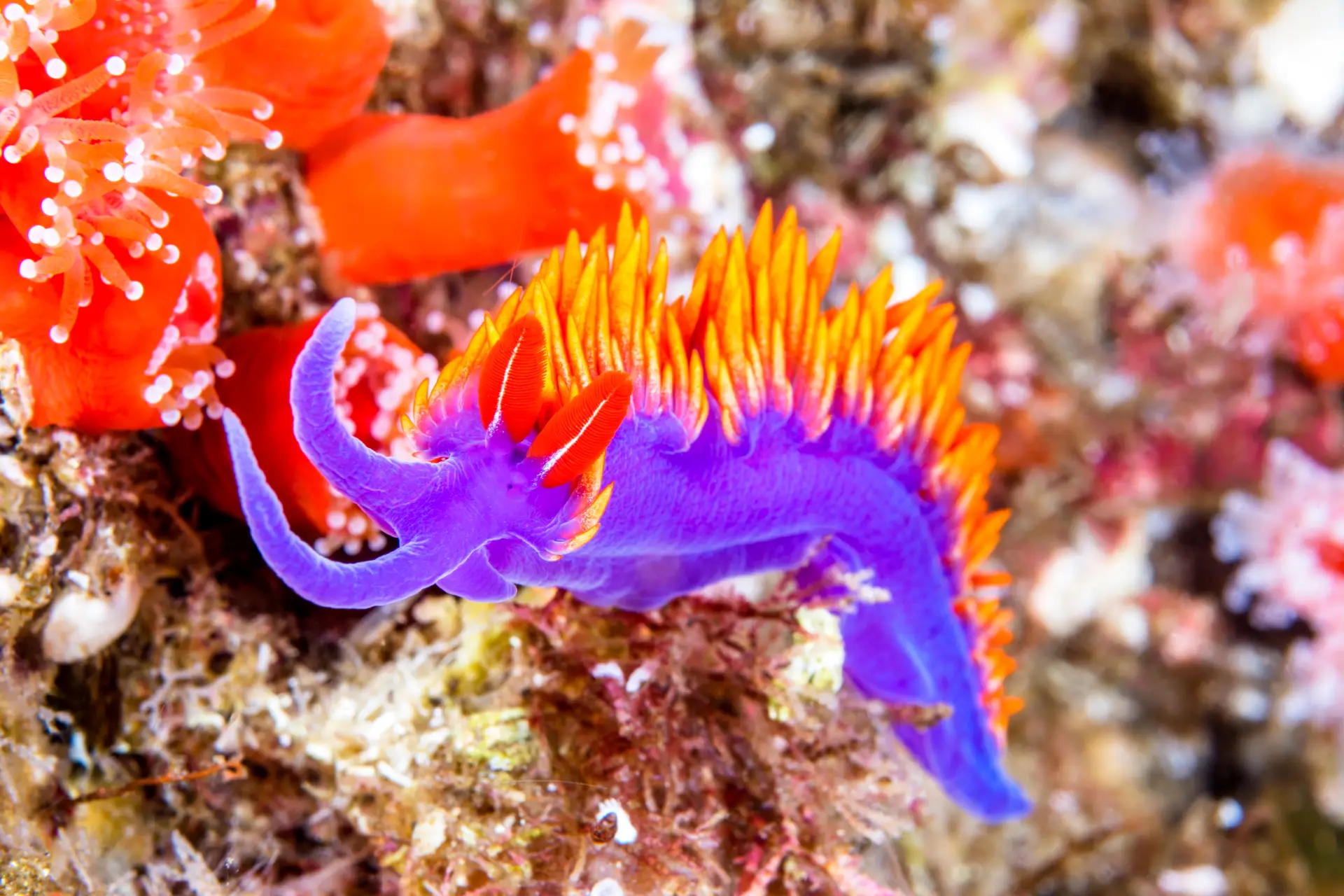
Once you’ve mastered the big stuff, you can switch to a macro lens and explore a completely different world. San Carlos is a treasure chest for tiny critters. You can:
- Hunt for Nudibranchs and Seahorses: These colorful, slow-moving subjects are the perfect models for mastering your macro lighting, achieving pinpoint focus, and learning to control your depth of field.
- Master Patience with the Bluespotted Jawfish: There is no better test of a photographer’s skills than capturing the perfect portrait of this shy, comical fish hovering above its burrow.
This incredible versatility means you can learn and practice a wider range of essential photography skills here than almost anywhere else.
Stop being frustrated with your camera. The vibrant, breathtaking images you see with your own eyes are within your reach. The key isn’t a new camera; it’s new knowledge.
Ready to stop taking blue pictures? Contact us today to sign up for the Underwater Photography specialty course and turn your memories into masterpieces!