

If you have ever dived at Isla San Pedro Nalasco, you have witnessed the seemingly endless energy of the California Sea Lion. They cartwheel, they race, they blow bubbles, and they engage in endless games of underwater tag. To a human observer, they seem like perpetual motion machines.
But that high-octane lifestyle requires fuel—and a lot of it. The Sea of Cortez is one of the most productive bodies of water on Earth, and the sea lions are its top-tier connoisseurs. They are intelligent, opportunistic, and voracious predators.
So, what exactly is on the menu for the “dogs of the sea”? Let’s take a look at the diet and hunting habits that keep San Carlos’ most famous residents powered up.
The Opportunistic Feeder: A Varied Menu
 California Sea Lions are what biologists call “opportunistic feeders.” This means they aren’t picky eaters; they eat what is abundant and available. In the nutrient-rich waters of San Carlos, this results in a seafood buffet that would make any sushi chef jealous.
Their primary diet consists of more than 50 different species of fish and cephalopods, but in our local waters, they heavily favor:
- Schooling Fish (The Staple): The bulk of their calories comes from oily, energy-dense schooling fish. Northern Anchovy, Pacific Sardines, Pacific Mackerel, and Pacific Whiting (Hake) are the bread and butter of the sea lion diet.
- Rockfish: When schooling fish are scarce, they will forage closer to the reef, hunting various species of rockfish found in the volcanic crevices of the island.
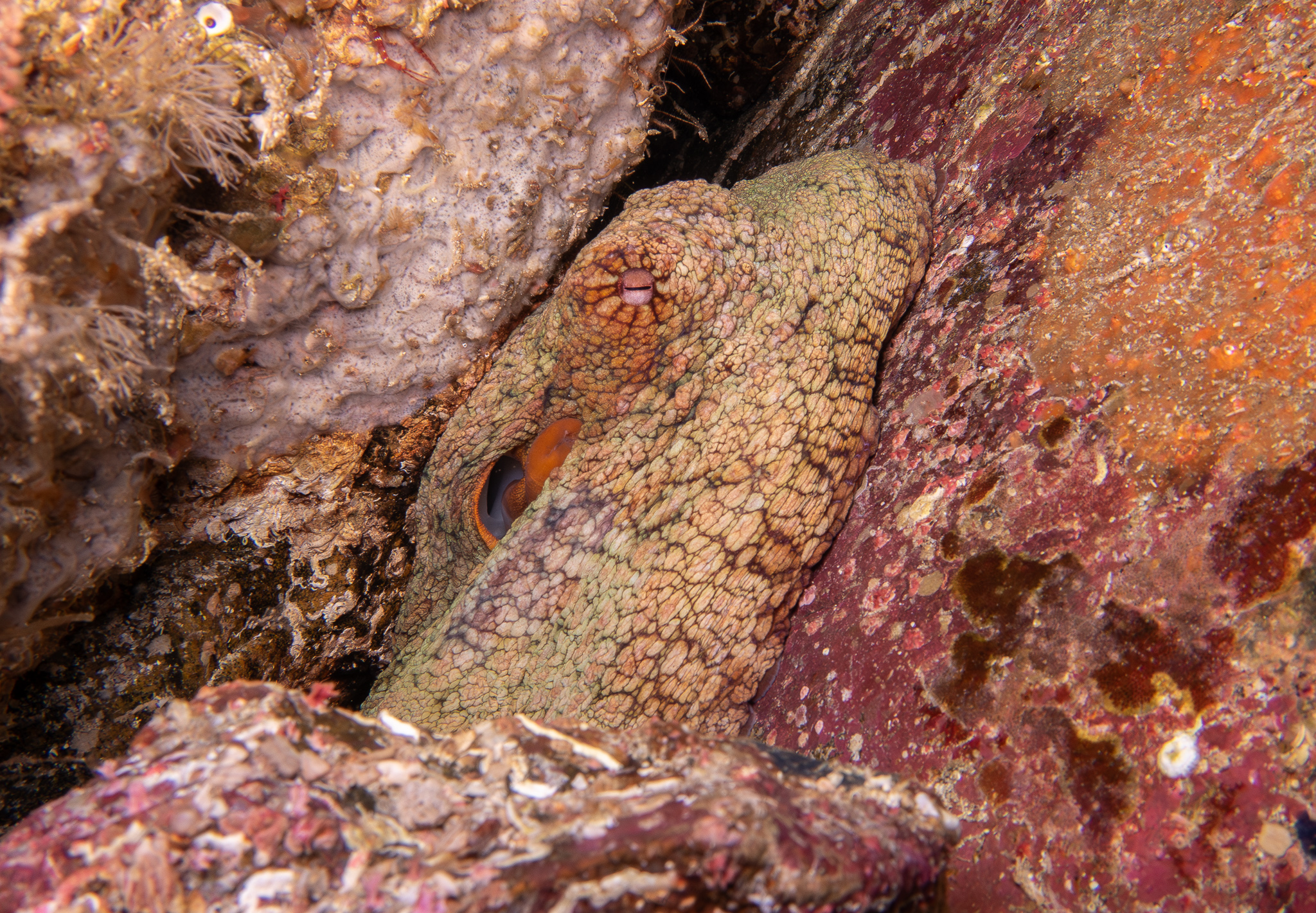
- Cephalopods (The Favorite Treat): Sea lions absolutely love squid and octopus. In fact, during certain times of the year when Market Squid are spawning, they can make up a huge percentage of the sea lion’s intake. If you see a sea lion thrashing something at the surface, it’s often a large squid or octopus they are breaking into bite-sized chunks.
The Super-Sensory Hunter
How do they find this food, especially in murky water or at night? They have a secret weapon: their whiskers.
Those adorable, bristly whiskers on their snout are actually highly specialized sensory organs called vibrissae. Each whisker is packed with nerves and blood vessels. They are incredibly sensitive to hydro-dynamic trails (movements in the water).
A sea lion can swim blindfolded and still track a swimming fish simply by feeling the wake the fish left behind minutes earlier. This allows them to hunt effectively in deep, dark water or when visibility drops during plankton blooms.
Hunting Tactics: Speed and Strategy
Watching a sea lion hunt is a display of pure hydrodynamic perfection. They use different tactics depending on the prey.
1. The Bait Ball Attack
When hunting schooling fish like sardines, sea lions often work cooperatively. They will herd the fish into a tight, swirling “bait ball” against the surface or a rock wall. Once the fish are trapped in a dense sphere, the sea lions take turns darting through the center, snatching mouthfuls of prey with incredible efficiency.
2. The Shake-and-Swallow
Sea lions don’t chew their food. Their teeth are designed for grasping and tearing, not grinding. Small fish are swallowed whole, usually head-first so the spines don’t catch in their throat. For larger prey, like a large rockfish or octopus, they bring it to the surface and violently shake it back and forth to tear it into swallowable chunks—much like a terrier playing with a toy.
3. Stones? Yes, Stones.
Here is a strange fact: Sea lions are often found with rocks in their stomachs. These are called gastroliths. While scientists are still debating the exact reason, the leading theories are that the stones help grind up food in their stomach (digestion aid) or act as ballast to control buoyancy during deep dives. So, if you see a sea lion mouthing a rock on the bottom, it might just be part of their digestive health routine!
Feast or Famine: The Breeding Season Fast
The need for food changes drastically depending on the time of year and the gender of the animal.
- Females: Nursing mothers have the highest energy demands. They will leave their pups on the rookery for a few days to go on intense foraging trips at sea, eating constantly to produce rich milk, before returning to nurse.
- Males: The massive bulls you see barking on the rocks during the summer breeding season are actually starving. To maintain their territory and their harem of females, dominant bulls will not eat for weeks at a time. They rely entirely on their stored blubber. If they leave to hunt, they lose their spot. This is why the bulls look so sleek in May and often quite ragged and thin by August.
A Critical Rule: Why We Never Feed Them
 Because sea lions are opportunistic, they will happily take an easy meal from a human. However, feeding wild sea lions is dangerous for the animal and the diver.
Feeding them alters their natural hunting behavior. They stop foraging and start harassing boats and divers for handouts. This leads to aggressive behavior (nips and bites) and can cause them to become entangled in fishing gear or struck by boat propellers as they lose their natural caution. In San Carlos, we strictly adhere to a “No Feeding” policy to keep our sea lion population wild, healthy, and safe.
The next time you are underwater at Isla San Pedro Nalasco and a sea lion zooms past you, remember: that energy is powered by the incredible bounty of the Sea of Cortez. They are the ultimate ambassadors of a healthy, thriving ocean.
Want to learn more about the ecosystem of the Sea of Cortez? Follow along with our blog as we continuously explore what makes the Sea of Cortez a unique exciting scuba destination.