

February is a special month in the Sea of Cortez. For the uninitiated, it might seem like an odd time to head to the beach. But for the seasoned San Carlos diver, February represents something else entirely: it is the peak of the “Big Animal” season and a time of breathtaking underwater clarity.
If you are planning a trip this month, leave your shorty wetsuit at home and pack your sense of adventure. Here is exactly what to expect when you dive San Carlos in the heart of winter.
The Conditions: Crisp, Clear, and Cool
Let’s manage expectations right away: The water in February is cool. You can expect temperatures to hover in the 60°F – 64°F (15°C – 17°C) range.
However, this drop in temperature brings a massive benefit: Visibility. With the summer plankton blooms long gone, the water often opens up to spectacular distances. It is not uncommon to have 80 to 100 feet of visibility. This makes February arguably the best month of the year for:
- Wreck Diving: Seeing the entire structure of the Santos or Suchiate laid out on the seafloor is a majestic sight that only happens during these clear winter months.
- Wide-Angle Photography: The crisp water allows for stunning, sharp images of divers against the dramatic rock formations.
 The Main Event: Peak Whale Season

The coolest water brings the giants. February is often considered the height of the whale migration in our area. The nutrient turnover in the Gulf attracts massive cetaceans, turning your surface intervals into a marine safari.
- Fin Whales: The “Greyhounds of the Sea” are year-round residents but are frequently spotted cruising the deep channels in winter.
- Humpbacks: This is prime time to spot Humpbacks breaching or slapping their tails on the surface.
- Dolphins: The super-pods of Common Dolphins are active and often number in the thousands, creating a “boiling sea” effect as they race alongside the dive boat.
The Reef Life: Nudibranchs and Mating Season
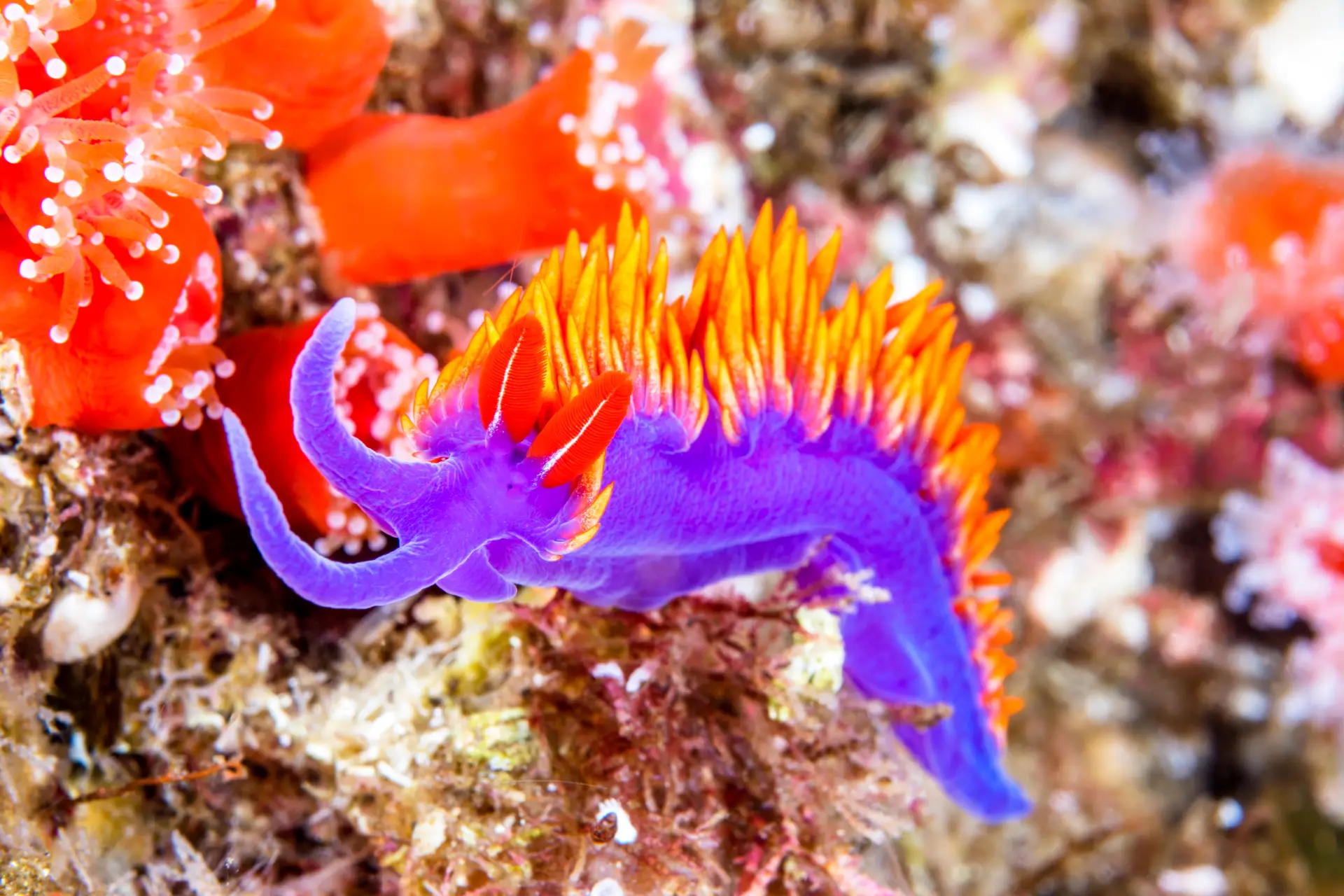
While the big animals are splashing on the surface, the reef itself is undergoing a winter transformation. The cooler water triggers a boom in macro life.
Nudibranch Heaven: If you love sea slugs, this is your month. The rocky reefs at Window Rock and San Antonio Point are often covered in colorful nudibranchs like the Spanish Shawl and the Tambja. They are out in force, making it a macro photographer’s dream.
Mating Behavior: You may spot interesting behaviors from residents like the Mobula rays, which often begin to school in tighter formations, or blennies engaging in territorial displays.
Topside: The Perfect Hiking Weather
One of the biggest advantages of a February trip is the weather above the water. While summer can be scorching, February offers perfect, sunny days with highs in the **70s°F (21-25°C)**.
This is the ideal time to tackle the hike up Tetakawi Hill. In the summer, this hike is grueling; in February, it is a pleasant morning scramble rewarded with the best view in Sonora. It’s also perfect for exploring Nacapule Canyon or kayaking in the estuaries without breaking a sweat.
The Gear Bag: What to Pack for February
To enjoy the magic of February, you must stay warm. Being cold ruins a dive, but being prepared makes it comfortable. We highly recommend:
- 7mm Wetsuit: A semi-dry suit or a high-quality 7mm full suit is the standard.
- Hooded Vest or Hood: We lose a huge amount of heat through our heads. A hood is a game-changer for multi-dive days.
- Gloves and Boots: Essential for thermal protection (and protection from the barnacles!).
- Boat Coat: Bring a windbreaker or a fleece for the boat ride back to the marina. The air is fresh, and the wind can be brisk.
The Verdict
February in San Carlos isn’t for the diver who just wants to float in warm bathwater. It is for the diver who wants to see the Sea of Cortez at its most dramatic. It is for the wreck lover who wants to see the ship from bow to stern, the nature lover hoping for a whale sighting, and the photographer looking for crystal-clear water.
Ready to bundle up and dive in? Contact us to book your winter expedition.